


Overview: What Is Open Concept Living in Interior?
Open concept living in interior refers to a layout design approach where traditionally separate spaces, such as the living room, dining area, and kitchen, are combined into one continuous, visually connected environment without full-height walls dividing them.
In practical terms, open concept living in interior removes physical barriers to create:
- Better spatial flow.
- Increased natural light distribution.
- Flexible furniture arrangements.
- Stronger social interaction within the home.
Originally popularised in modern Western architecture, this layout concept has become increasingly common in Singapore’s HDB flats, condominiums, and landed properties where space efficiency is critical.
At ARTrend Interior Design, we’ve observed that open concept living in interior is not just a design trend, it’s a strategic response to compact urban living
Why Open Concept Living in Interior Is So Popular Today
The rise of open concept living in interior reflects lifestyle shifts:
- Families prefer shared spaces over isolated rooms.
- Natural light is prioritised.
- Multi-functional living is more common.
- Remote work requires adaptable layouts.
According to Houzz renovation trend reports, over 45% of homeowners prefer open-plan layouts for main living areas.In Singapore, where space comes at a premium, removing unnecessary walls can make a 900 sqft flat feel significantly larger.
Core Benefits of Open Concept Living in Interior
1. Enhanced Spatial Perception
Without walls interrupting sightlines, the home feels:
- Larger.
- Airier.
- Less cluttered.
The psychology behind spatial openness shows that visual continuity reduces cognitive stress and improves comfort perception.
2. Improved Natural Lighting
Open layouts allow daylight from windows to travel deeper into the home.
Benefits include:
- Reduced reliance on artificial lighting.
- Better energy efficiency.
- Warmer ambiance.
In HDB flats with single-side windows, this is particularly valuable.
3. Social Connectivity
Open concept living in interior encourages:
- Easier conversation while cooking.
- Supervision of children.
- Better entertaining flow.
Homes become interactive environments instead of compartmentalised zones.
When Open Concept Living in Interior May Not Work
Despite its popularity, it isn’t suitable for every home.
Potential Drawbacks
- Noise travels easily.
- Cooking smells spread.
- Less privacy.
- Requires strong design control to avoid visual chaos.
This is why zoning strategies are critical.
How to Design Open Concept Living in Interior Properly
Simply knocking down walls is not enough. Proper planning determines success.
Step 1: Define Functional Zones
Even in open layouts, invisible boundaries should exist.
Use:
- Area rugs.
- Lighting changes.
- Ceiling treatment variations.
- Furniture placement.
Step 2: Maintain Visual Cohesion
Use a controlled colour palette:
- 1 main base colour.
- 1 secondary tone.
- 1 accent.
This avoids visual fragmentation.
Step 3: Acoustic Planning
Open layouts amplify sound.
Solutions include:
- Fabric panels.
- Upholstered furniture.
- Soft furnishings.
- Acoustic ceiling boards.
Open Concept Living in Interior vs Traditional Layout
Feature Open Concept Traditional Layout Walls Minimal Clearly separated Lighting Shared Compartmentalised Privacy Moderate High Flexibility High Limited Social Interaction Strong Controlled
| Feature | Open Concept | Traditional Layout |
|---|---|---|
| Walls | Minimal | Clearly separated |
| Lighting | Shared | Compartmentalised |
| Privacy | Moderate | High |
| Flexibility | High | Limited |
| Social Interaction | Strong | Controlled |
Both layouts serve different lifestyles.
Zoning Techniques in Open Concept Living in Interior
A common misconception is that open means undefined.
Professional zoning includes:
- Partial glass partitions.
- Sliding panels.
- Half-height dividers.
- Built-in shelving separators.
For homeowners who value energy flow principles, zoning can also be aligned with concepts discussed in feng shui interior design singapore.
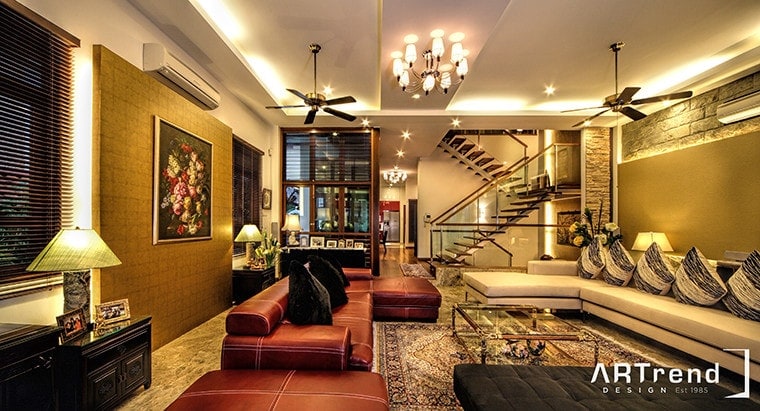
This approach ensures openness without compromising balance.
Case Study Insight: 4-Room HDB Transformation
From ARTrend’s internal project reviews:
Original Layout:
- Enclosed kitchen.
- Narrow dining corridor.
- Small living area.
After Open Concept Redesign:
- Kitchen island as divider.
- Combined dining-living zone.
- Enhanced lighting strategy.
Results:
- 22% perceived space increase (client survey).
- Better furniture flexibility.
- Improved resale appeal.
This demonstrates that open concept living in interior, when executed properly, enhances both lifestyle and property value.
Cost Considerations for Open Concept Living in Interior
Key factors influencing cost:
- Structural wall removal feasibility.
- Flooring integration.
- Ceiling redesign.
- Electrical rewiring.
Important:
Not all walls in HDB flats can be removed. Always verify structural elements with HDB guidelines.
Common Mistakes in Open Concept Living in Interior
- Overcrowding furniture.
- Ignoring storage planning.
- Using too many design styles.
- Poor lighting layering.
- No acoustic strategy.
Open spaces require even stronger discipline.
How ARTrend Approaches Open Concept Living in Interior
At ARTrend Interior Design, our approach integrates:
- Residential space planning expertise.
- Lighting strategy.
- Material coordination.
- Lifestyle alignment.
- Authority-compliant renovation documentation.
We do not simply remove walls. We redesign the experience of the space.
Practical Checklist Before Choosing Open Concept Living in Interior
Ask yourself:
- Do I prioritise openness over privacy?
- Can my cooking habits adapt to open layouts?
- Is my home structurally suitable?
- Will storage remain sufficient?
- Am I comfortable with visible clutter exposure?
If the answer to most is yes, open concept living in interior may suit you.
Conclusion: Should You Choose Open Concept Living in Interior?
Open concept living in interior is not just about trends, it’s about adapting homes to modern lifestyles. It improves light, flow, and flexibility, but only when thoughtfully executed.
At ARTrend Interior Design, we help homeowners evaluate whether open layouts suit their property and lifestyle before committing.
If you are considering an open layout transformation, visit our website to explore how we design Residential Services that balance openness with function.
Frequently Asked Questions
Is open concept living suitable for small HDB flats?
Yes, when planned properly, it makes small spaces feel larger and brighter.
Can I remove any wall in an HDB flat?
No. Structural walls cannot be removed without approval.
Does open concept reduce property value?
Generally no. In fact, modern buyers often prefer open layouts.
How do I control cooking smells?
Use strong kitchen hoods and proper ventilation planning.
Is open concept living more expensive?
It depends. Structural changes can increase cost, but the long-term lifestyle benefit often justifies it.
Is open concept living suitable for small HDB flats?
Yes, when planned properly, it makes small spaces feel larger and brighter.
Can I remove any wall in an HDB flat?
No. Structural walls cannot be removed without approval.
Does open concept reduce property value?
Generally no. In fact, modern buyers often prefer open layouts.
How do I control cooking smells?
Use strong kitchen hoods and proper ventilation planning.
Is open concept living more expensive?
It depends. Structural changes can increase cost, but the long-term lifestyle benefit often justifies it.