


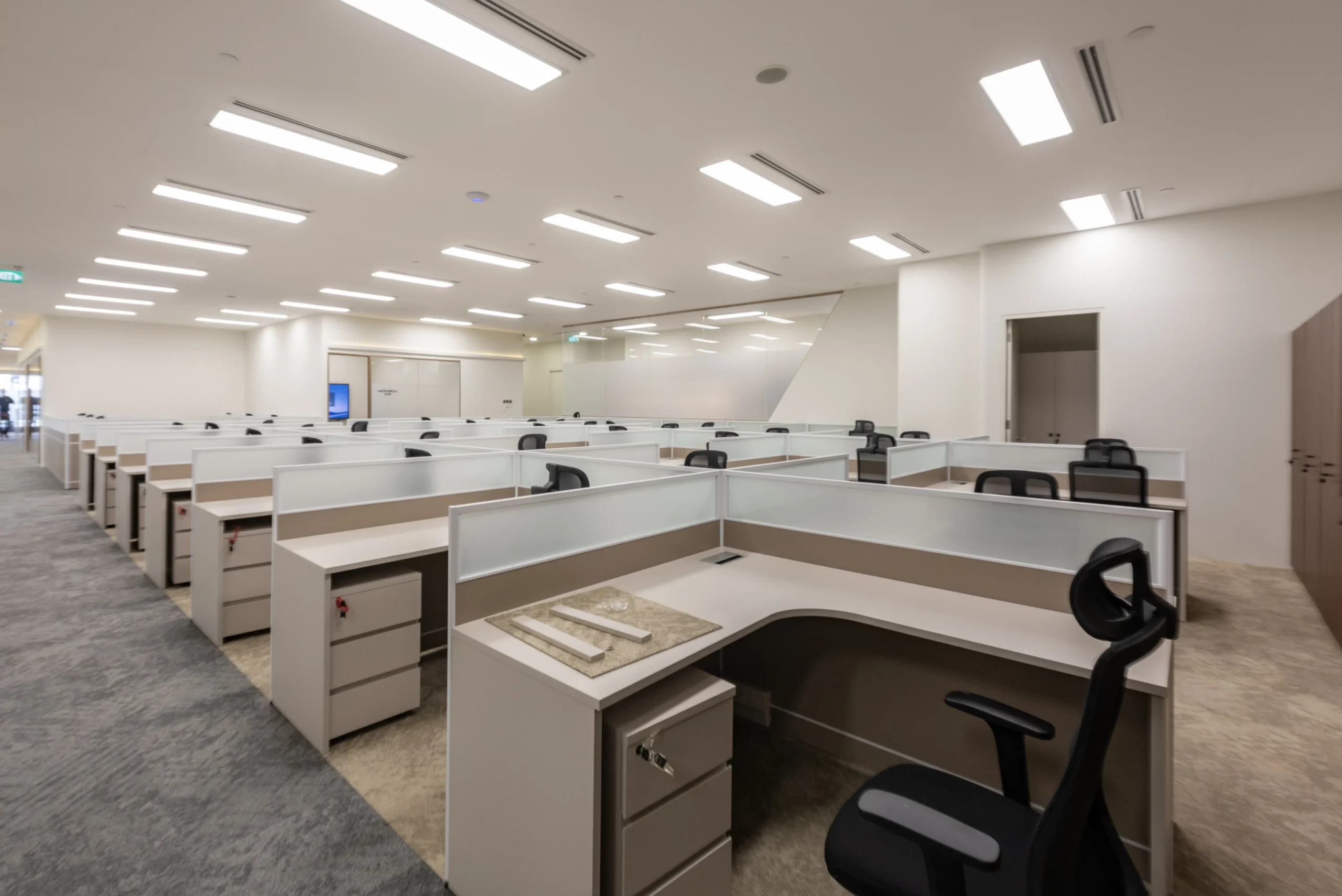
Modern workspace ideas in 2026 refer to the way offices, studios, and commercial interiors are designed to support flexibility, mental focus, collaboration, and technology-driven workflows. Unlike traditional offices that were built around desks and hierarchy, modern workspaces in 2026 are shaped by human behavior, hybrid schedules, and the simple fact that people no longer work the same way every day.
In many ways, the modern workspace is less about furniture and more about experience. How a space feels at 9am is just as important as how it functions at 4pm. This shift is happening across Singapore and globally, especially in creative firms, tech companies, and professional services.
Why Modern Workspace Ideas in 2026 Matter More Than Ever
Work has changed quietly, then all at once.
Between 2020 and now, companies learned something uncomfortable: productivity doesn’t come from forcing people to sit in one place for eight hours. It comes from giving them the right environment, at the right moment. Interestingly, this mirrors how successful retail spaces are designed, guiding behavior rather than enforcing it, a core principle often discussed in retail design tips in Singapore.
By 2026, modern workspace ideas are driven by a few undeniable realities:
- Hybrid work is normal, not a trend
- Teams are smaller but more collaborative
- Offices are now used for thinking, meeting, and creating, not just “showing up”
According to multiple workplace studies published between 2023–2025, companies that redesigned offices for flexibility saw:
- Up to 23% higher employee satisfaction
- Around 15–20% improvement in collaboration metrics
- Lower space wastage due to adaptable layouts
These numbers aren’t shocking. They’re logical.
Core Principles Behind Modern Workspace Ideas in 2026
Human-Centered Design Comes First
In 2026, modern workspace ideas start with people, not floor plans.
Designers now ask questions like:
- Where do people actually focus?
- When do they need privacy?
- How often do teams really meet in person?
This leads to:
- Softer lighting zones
- Fewer rigid cubicles
- More informal seating mixed with proper workstations
It’s less about control, more about trust.
Flexibility Is No Longer Optional
One fixed layout cannot serve five different working styles.
Modern workspace ideas in 2026 always include:
- Moveable partitions
- Multi-use rooms
- Furniture that can be reconfigured in minutes
A meeting room in the morning might become a quiet work zone in the afternoon. This is intentional, not accidental.
Technology Is Integrated, Not Shown Off
In the past, offices loved to display technology. Screens everywhere, cables everywhere.
In 2026, technology disappears into the background.
Examples include:
- Wireless presentation systems
- Smart booking for rooms and desks
- Lighting and temperature that auto-adjusts
When tech works well, people stop noticing it. That’s the goal.
Modern Workspace Layout Ideas That Actually Work
Activity-Based Work Zones
Instead of assigning one desk per person, modern workspace ideas in 2026 often use activity-based planning.
Common zones include:
- Focus zones (quiet, low stimulation)
- Collaboration zones (open, casual)
- Meeting rooms (formal and informal)
- Recharge spaces (short breaks, not naps)
This layout mirrors how humans shift tasks throughout the day.
Smaller Offices, Better Use
Office sizes are shrinking, but quality is rising.
Rather than large empty floors, companies invest in:
- Better acoustics
- Higher quality materials
- Thoughtful circulation paths
This is where experienced interior design firms matter. Poor planning wastes space fast.
Design Elements Defining Modern Workspace Ideas in 2026
Materials and Colors
Trends are moving away from cold, overly industrial looks.
Popular choices include:
- Natural wood tones
- Soft neutral colors with warm accents
- Textured surfaces that reduce visual fatigue
These choices aren’t about aesthetics alone. They affect mood more than people realize.
Lighting That Follows the Day
Lighting is one of the most overlooked parts of workspace design.
In 2026, modern workspace ideas prioritize:
- Layered lighting (ambient, task, accent)
- Reduced glare on screens
- Warmer tones in break areas
Some offices even adjust lighting temperature based on time of day.
Case Snapshot: A Singapore Office Redesign
A mid-sized professional firm in Singapore redesigned its workspace in 2024 using principles now common in modern workspace ideas in 2026.
Changes included:
- Removing 30% of fixed desks
- Adding flexible meeting pods
- Improving acoustic treatment
Results after 6 months:
- Fewer complaints about noise
- Higher voluntary office attendance
- Better internal collaboration feedback
The space didn’t get bigger. It got smarter.
How Interior Design Expertise Shapes Modern Workspaces
Modern workspace ideas in 2026 require more than Pinterest inspiration.
Experienced interior design firms understand:
- Local building regulations
- Space optimization for high-rent cities like Singapore
- Long-term maintenance and durability
This is where firms with decades of commercial design experience, like ARTrend, stand out. Their background in workspace planning, renovation execution, and design-build coordination allows companies to avoid costly redesigns later.
Common Mistakes Companies Still Make
Even in 2026, some mistakes keep repeating:
- Designing for image instead of use
- Ignoring acoustic comfort
- Overloading open spaces
- Underestimating storage needs
- Copying trends without context
Modern workspace ideas only work when adapted, not copied.
Practical Steps to Plan a Modern Workspace in 2026
Step-by-Step Guide
- Audit how your team actually works
- Identify peak activities (focus vs collaboration)
- Plan zones before choosing furniture
- Integrate technology early, not last
- Work with experienced workspace designers
Skipping steps usually leads to regrets.
Quick Comparison Table: Old vs Modern Workspace
Aspect Traditional Office Modern Workspace 2026 Layout Fixed desks Flexible zones Lighting Uniform Layered & adaptive Technology Visible Integrated Focus Presence Productivity Design Goal Control Comfort & flow
Why ARTrend Focuses on Modern Workspace Ideas in 2026
| Aspect | Traditional Office | Modern Workspace 2026 |
|---|---|---|
| Layout | Fixed desks | Flexible zones |
| Lighting | Uniform | Layered & adaptive |
| Technology | Visible | Integrated |
| Focus | Presence | Productivity |
| Design Goal | Control | Comfort & flow |
At ARTrend, modern workspace design is approached with one simple belief: a workspace should support people before impressing visitors.
With decades of experience in commercial interior design and renovation in Singapore, ARTrend understands:
- How teams actually move and interact
- How to balance design with practicality
- How to future-proof spaces without overspending
Every workspace is treated as a living system, not a static layout.
Learn more about our approach to workspace planning and interior renovation at ARTrend
Final Thoughts + Pro Tips
Modern workspace ideas in 2026 are not about trends. They’re about honesty. Honest observation of how people work, think, and collaborate.
Pro tips before you redesign:
- Don’t design for everyone, design for your team
- Flexibility beats perfection
- Comfort improves performance more than aesthetics
- Always plan for change
If your office still feels like it belongs to another decade, it probably does. And that’s okay, it just means it’s time to rethink, not rebuild blindly.
FAQs (Frequently Asked Questions)
What makes modern workspace ideas in 2026 different from 2024?
The focus has shifted from hybrid work adaptation to long-term sustainability, employee well-being, and smarter use of smaller spaces.
Are modern workspace ideas suitable for small offices?
Yes, especially for small offices. Flexibility and zoning actually help maximize limited space.
Is open-plan office still relevant in 2026?
Partially. Open areas are balanced with quiet zones and acoustic solutions.
How much technology is necessary?
Only what improves work. Too much tech becomes a distraction instead of a tool.
Do modern workspaces cost more?
Not always. Better planning often reduces long-term renovation and operational costs.
What makes modern workspace ideas in 2026 different from 2024?
The focus has shifted from hybrid work adaptation to long-term sustainability, employee well-being, and smarter use of smaller spaces.
Are modern workspace ideas suitable for small offices?
Yes, especially for small offices. Flexibility and zoning actually help maximize limited space.
Is open-plan office still relevant in 2026?
Partially. Open areas are balanced with quiet zones and acoustic solutions.
How much technology is necessary?
Only what improves work. Too much tech becomes a distraction instead of a tool.
Do modern workspaces cost more?
Not always. Better planning often reduces long-term renovation and operational costs.