


What is Sustainable Home Decor in Singapore 2026?
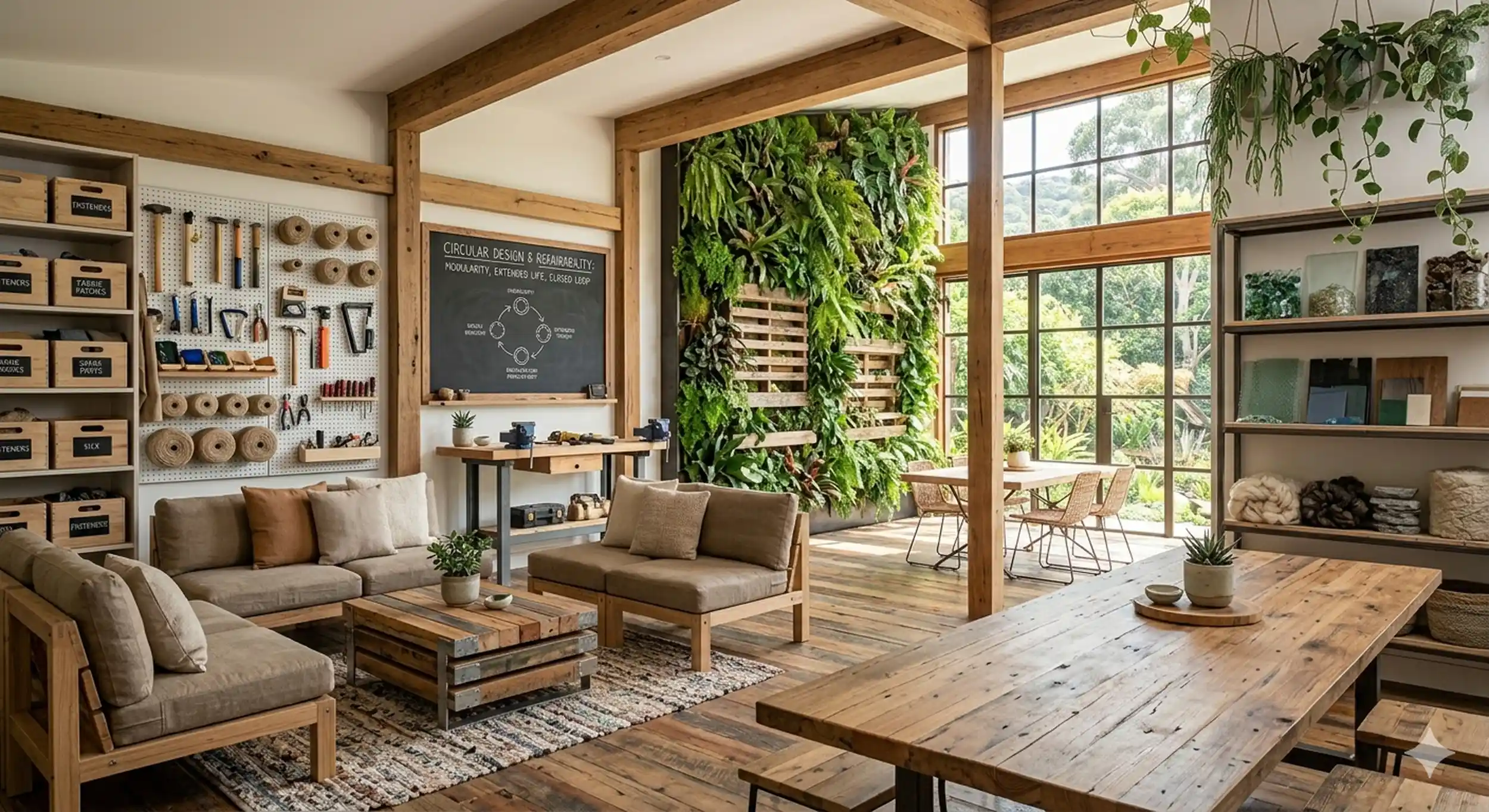
Sustainable home decor in Singapore 2026 refers to the practice of designing and furnishing living spaces using materials, technologies, and processes that minimize environmental impact while promoting human health. This includes prioritizing renewable resources (like bamboo and rattan), utilizing circular design principles (repairable and recyclable furniture), and integrating biophilic elements to improve indoor air quality and mental well-being. It is a holistic approach aligned with the Singapore Green Plan 2030, focusing on reducing waste and carbon footprints within our unique urban landscape.
At ARTrend Design, we see sustainability not as a trend, but as a long-term design philosophy.
The 2026 Context: Why Sustainability Matters Now
The year 2026 marks a pivotal point for Singapore. With the government’s target to reduce waste to landfill per capita by 20% this year, homeowners are increasingly conscious of their consumption. We are seeing a move away from “fast furniture” toward high-quality, durable pieces that last for decades.
Singapore’s compact living environment makes sustainability even more important. Key benefits:
- Better air quality → fewer toxins from paints and furniture
- Lower energy bills → energy-efficient lighting and appliances
- Long-term savings → durable materials reduce replacement costs
- Eco-conscious lifestyle → supports Singapore’s Green Plan 2030
In dense cities, small design choices can create big environmental impact.
As a firm that has created over 18,000 dream homes, we have integrated these national goals into our design philosophy. We recognize that the 2026 homeowner seeks longevity, health, and ethical sourcing, all while maintaining the aesthetic excellence expected in high-end Singaporean property.
Core Materials for a Greener Home
To help you make informed decisions, we have curated a comparison of the most popular eco-friendly materials being used in sustainable home decor in Singapore 2026.
| Material | Environmental Benefit | Best Application | Why We Use It |
| Bamboo | Rapidly renewable; sequesters carbon. | Flooring, modular seating, partitions. | Stronger than most hardwoods and handles 80% humidity beautifully. |
| Reclaimed Wood | Reduces deforestation; prevents landfill waste. | Feature walls, statement dining tables. | Adds unique character and “soul” that new timber cannot replicate. |
| Rattan | Sustainably harvested; biodegradable. | Accent chairs, cabinetry inserts, lamps. | Lightweight and culturally resonant with our tropical heritage. |
| Cork | Harvested without killing trees; natural insulator. | Wall coverings, flooring underlayment. | Excellent acoustic properties for quiet, peaceful HDB or Condo living. |
| Low-VOC Paints | Minimizes toxic off-gassing. | All interior walls and custom carpentry. | Essential for a healthy indoor environment and better respiratory health. |
Selecting green materials for your furniture is excellent, but the real impact begins during the construction phase. To understand how we implement sustainable building practices and waste reduction from day one, explore our specialized guide on eco-friendly renovation in Singapore.
Top 5 Sustainable Decor Trends for 2026
Based on our extensive portfolio and current market analysis, these are the five key trends defining the landscape of sustainable home decor in Singapore 2026.
1. Biophilic Renewal & Living Walls
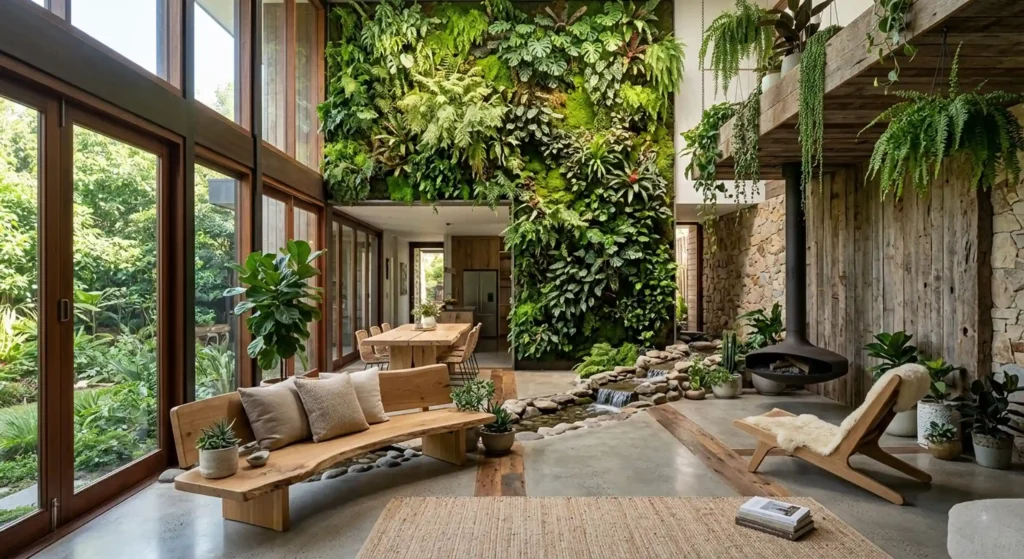
We are moving beyond simply placing a few potted plants. In 2026, we are integrating nature into the very structure of the home. This includes living green walls with automated irrigation and the use of organic shapes in furniture, such as curved sofas and tactile surfaces to foster a psychological connection to the natural world.
2. Hyper-Local Sourcing & Artisan Craft
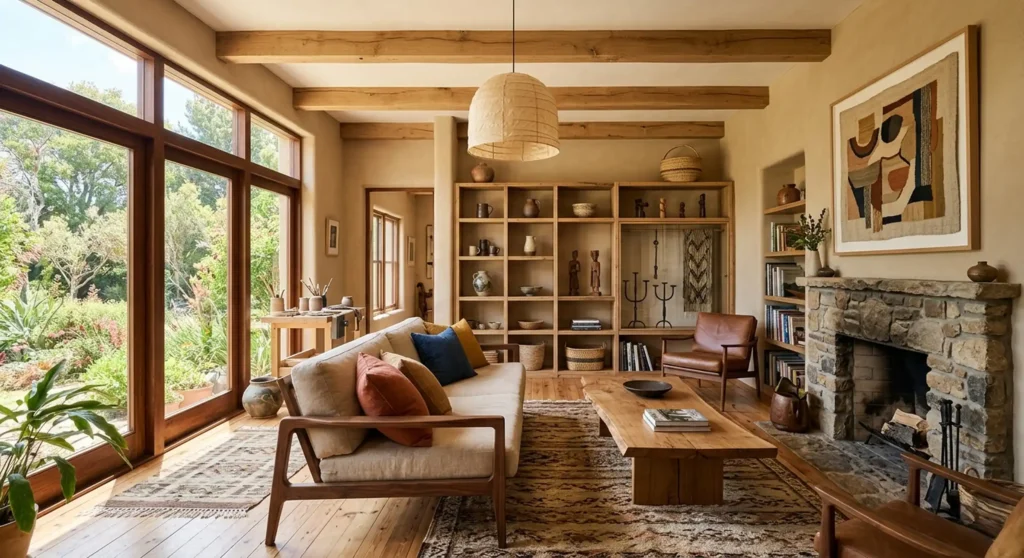
Reducing transportation emissions is a priority. We actively collaborate with local Singaporean artisans to create bespoke furniture. This not only supports our community but ensures that pieces are crafted for our specific climate using traditional, long-lasting techniques.
3. “Less but Better” (Mindful Minimalism)
This is the art of choosing quality over quantity. Instead of frequent, trend-driven updates, we guide our clients toward timeless pieces of emotional resonance. Our in-house carpentry plays a vital role here, allowing us to build custom, high-durability storage that eliminates the need for excess freestanding furniture.
4. Circular Design & Repairability
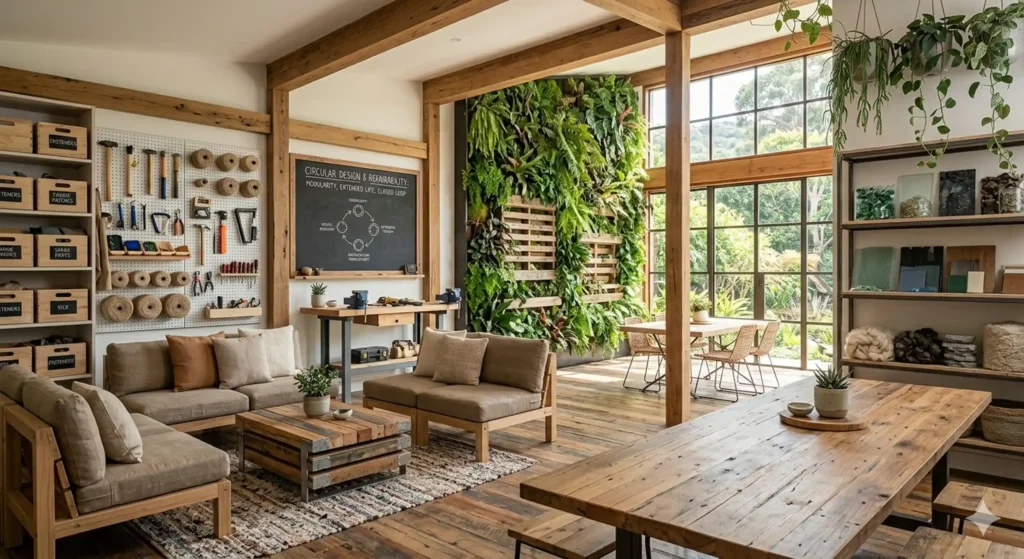
Modular furniture is the standard in 2026. We design spaces with pieces that can be easily repaired, upgraded, or recycled at the end of their life cycle. This “closed-loop” approach ensures that your home decor remains relevant and functional without contributing to the landfill.
5. Invisible Green Tech
Sustainability in 2026 is smart and hidden. We integrate energy-efficient LED lighting systems and smart thermostats that learn your habits to reduce electricity consumption automatically. These technologies work behind the scenes to lower your utility bills and carbon footprint.
How to Implement Sustainable Design: A Step-by-Step Guide
If you are planning a renovation, here is how we recommend you approach a sustainable transformation:
- Analyze the Floor Plan: Start by maximizing natural light and ventilation. This reduces reliance on artificial lighting and air conditioning.
- Select Sustainable Materials Early: Ensure your wood is FSC-certified and your finishes meet the Singapore Green Label standards for low formaldehyde emissions.
- Invest in Custom In-House Carpentry: Standard packages often use mass-produced materials of lower quality. Our in-house workshop ensures we use premium, sustainably sourced materials that fit your space perfectly, reducing waste during installation.
- Prioritize Energy Efficiency: Opt for appliances with high energy-efficiency ratings and integrate smart home features to manage power use.
While focusing on eco-friendly materials is vital, it is equally important to maintain a cohesive aesthetic across your property. To see how these green principles can be applied to various styles, we encourage you to explore our broader Home Interior Design Ideas for inspiration on layout and visual harmony.
Sustainable vs Conventional Home Decor
Feature Sustainable Decor Conventional Decor Materials Renewable / recycled Mass-produced Air Quality Low-VOC, non-toxic Chemical-heavy Lifespan Long-lasting Short-term Energy Efficiency High Moderate to low Environmental Impact Low High
Authority Building: Your Partner in Green Excellence
| Feature | Sustainable Decor | Conventional Decor |
|---|---|---|
| Materials | Renewable / recycled | Mass-produced |
| Air Quality | Low-VOC, non-toxic | Chemical-heavy |
| Lifespan | Long-lasting | Short-term |
| Energy Efficiency | High | Moderate to low |
| Environmental Impact | Low | High |
At ARTrend, our legacy is built on integrity and quality. We have successfully completed 18,000 projects, and our commitment to sustainable home decor in Singapore 2026 is the next chapter in our mission to create exceptional living environments. By choosing to work with a firm that understands the technical nuances of eco-friendly design and possesses the in-house capabilities to execute it, you are ensuring your home is ready for the future.
We invite you to visit our showroom to experience the tactile beauty of sustainable materials firsthand. Let’s collaborate to build a home that is as responsible as it is beautiful. Contact Us Today to begin your sustainable journey.
Frequently Asked Questions (FAQs)
Is sustainable home decor more expensive than traditional options in Singapore?
While the initial investment in premium materials like reclaimed timber or high-efficiency tech may be slightly higher, it offers significant long-term value. Sustainable materials are typically more durable, and energy-efficient systems drastically reduce monthly utility costs, making it a more cost-effective choice over the life of the home.
How does ARTrend ensure the sustainability of its custom furniture?
We manage the entire process through our in-house carpentry workshop. This allows us to have total control over material sourcing (prioritizing FSC-certified wood) and waste management. By building to the exact specifications of your home, we eliminate the material waste common in mass-produced alternatives.
Can I achieve a Modern Luxury look using only sustainable materials?
Absolutely. In 2026, many high-end materials are eco-friendly. We use sintered stone (recycled mineral content) to mimic the look of rare marble and recycled metallic accents to provide that opulent feel. Sustainability and luxury are now perfectly compatible.
What is the benefit of biophilic design in a high-density city like Singapore?
Biophilic design is scientifically proven to reduce stress and boost productivity. In Singapore’s urban environment, bringing natural textures and plants indoors improves air quality and provides a much-needed mental “reset” from the digital world.
Why is sustainability important in Singapore homes?
Due to limited space and high density, sustainable design improves air quality, energy efficiency, and long-term livability.
Is sustainable home decor more expensive than traditional options in Singapore?
While the initial investment in premium materials like reclaimed timber or high-efficiency tech may be slightly higher, it offers significant long-term value. Sustainable materials are typically more durable, and energy-efficient systems drastically reduce monthly utility costs, making it a more cost-effective choice over the life of the home.
How does ARTrend ensure the sustainability of its custom furniture?
We manage the entire process through our in-house carpentry workshop. This allows us to have total control over material sourcing (prioritizing FSC-certified wood) and waste management. By building to the exact specifications of your home, we eliminate the material waste common in mass-produced alternatives.
Can I achieve a Modern Luxury look using only sustainable materials?
Absolutely. In 2026, many high-end materials are eco-friendly. We use sintered stone (recycled mineral content) to mimic the look of rare marble and recycled metallic accents to provide that opulent feel. Sustainability and luxury are now perfectly compatible.
What is the benefit of biophilic design in a high-density city like Singapore?
Biophilic design is scientifically proven to reduce stress and boost productivity. In Singapore’s urban environment, bringing natural textures and plants indoors improves air quality and provides a much-needed mental “reset” from the digital world.
Why is sustainability important in Singapore homes?
Due to limited space and high density, sustainable design improves air quality, energy efficiency, and long-term livability.